Introduction to Embedded Systems
What is an Embedded System?
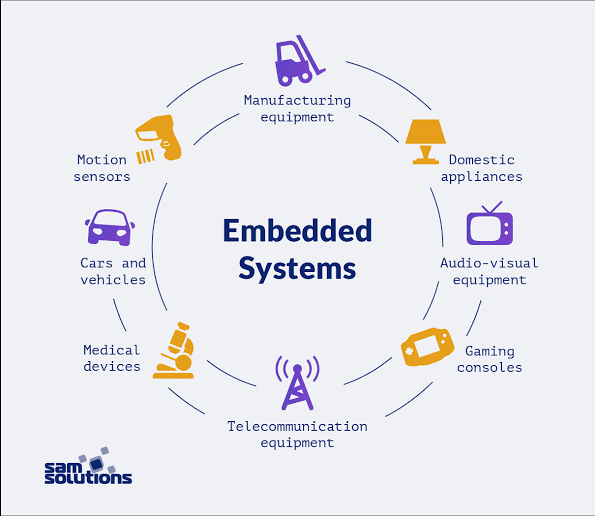
Embedded systems are specialized computing systems designed to perform dedicated functions within larger systems. Unlike general-purpose computers, embedded systems have specific tasks, making them efficient and reliable. These systems integrate hardware and software to operate under real-time constraints. A classic example is the microcontroller managing the functionality of a washing machine.
Embedded systems are found in numerous devices around us, from household appliances to advanced industrial machines. The efficiency of embedded systems lies in their ability to process data, respond quickly to changes, and operate in harsh or resource-constrained environments.
Examples of Embedded Systems
Embedded systems are omnipresent in today’s technological landscape. Here are some examples:
- Consumer Electronics: Televisions, microwaves, smartwatches, and home assistants like Alexa or Google Home.
- Automotive Systems: Engine control units, anti-lock braking systems, adaptive cruise control, and self-driving technologies.
- Medical Devices: Insulin pumps, pacemakers, ECG machines, and portable health monitors.
- Industrial Machines: Robotics, CNC machines, SCADA systems, and factory automation controllers.
- Aerospace: Navigation systems, autopilots, and satellite communication modules.
How Does an Embedded System Work?
At its core, an embedded system functions through the interaction of its hardware and software components:
- Microcontroller or Microprocessor: Executes the program and controls the system.
- Firmware: Specialized software that runs on the hardware, ensuring seamless operation.
- Peripherals: Sensors gather data from the environment, and actuators perform actions based on that data.
For example, in a smart thermostat, sensors detect the room temperature, and the microcontroller processes this data to adjust the heating or cooling system accordingly. The firmware ensures the thermostat operates efficiently and accurately.
Example of a Simple Embedded System
Let’s consider an embedded system controlling a coffee machine:
- Inputs: Buttons to select coffee type and size.
- Processing Unit: Microcontroller running the control logic.
- Outputs: Heating element, water pump, and display screen showing progress.
Characteristics of Embedded Systems
Embedded systems possess distinct characteristics that make them suitable for specific tasks:
- Real-Time Operation: Executes tasks within strict time constraints, critical for systems like pacemakers or airbag controllers.
- Reliability: Designed to operate continuously without failure, essential for industrial automation and medical devices.
- Power Efficiency: Optimized for minimal energy consumption, crucial for battery-powered devices like wearables.
- Compact Size: Small physical footprint for seamless integration, as seen in IoT devices.
- Cost Efficiency: Low production and operational costs, enabling widespread adoption in consumer electronics.
Structure of Embedded Systems
The architecture of an embedded system comprises the following components:
- Hardware: Includes microcontrollers, memory, input/output devices, sensors, and actuators.
- Software: Firmware and application code executed on the hardware, tailored for specific tasks.
- Communication Interfaces: Protocols and ports for data exchange, such as I2C, UART, SPI, and Ethernet.
Types of Embedded Systems
Embedded systems can be categorized based on functionality:
- Standalone Systems: Operate independently, such as digital cameras and MP3 players.
- Real-Time Systems: Ensure timely task execution, e.g., traffic light controllers and robotics.
- Networked Systems: Communicate over networks, like IoT devices and smart grids.
- Mobile Systems: Portable systems, such as smartphones, tablets, and GPS devices.
Debugging Embedded Systems
Debugging ensures the correct functionality of embedded systems. Common techniques include:
- Simulation: Testing software in a virtual environment to identify issues early.
- In-Circuit Debugging: Real-time debugging on hardware to pinpoint faults.
- Logic Analysis: Monitoring signal integrity to ensure accurate communication.
- Trace Debugging: Capturing detailed execution paths to analyze complex behaviors.
Below is an example of debugging a simple LED blink issue in Arduino:
// Verify pin connections and logic
if (digitalRead(13) == HIGH) {
    Serial.println("LED is ON");
} else {
    Serial.println("LED is OFF");
}
History of Embedded Systems
The evolution of embedded systems began in the 1960s with the Apollo Guidance Computer, a pivotal innovation for the moon landing mission. Over decades, advancements in semiconductor technology have propelled embedded systems into diverse fields, from consumer electronics to space exploration.
Some key milestones include:
- 1970s: Introduction of the first microcontroller, the Intel 4004.
- 1980s: Widespread adoption in consumer electronics like video game consoles.
- 1990s: Growth of embedded systems in automotive and medical fields.
- 2000s: Emergence of IoT and smart devices.
Embedded System Trends
Modern embedded systems are at the forefront of technological advancements. Emerging trends include:
- Edge Computing: Processing data closer to the source to reduce latency and bandwidth usage.
- AI Integration: Incorporating machine learning for smarter devices, such as predictive maintenance in factories.
- IoT Expansion: Interconnecting devices for enhanced automation in smart homes and cities.
- Energy Efficiency: Developing systems with ultra-low power consumption for sustainability.
- Blockchain: Adding layers of security in IoT-based embedded systems for data integrity.
The continual evolution of these trends underscores the dynamic nature of embedded systems and their increasing relevance in modern technology.
Conclusion
Embedded systems are pivotal to modern technology, enabling innovations across industries. Understanding their components and operation empowers engineers to design efficient and reliable solutions for complex problems. With rapid advancements, embedded systems promise a future filled with groundbreaking innovations. Stay tuned for deeper insights into advanced topics in embedded systems, including machine learning applications, IoT integration, and energy-efficient design methodologies!


Comments
Post a Comment